The Internet of Things Is Still a Privacy Dumpster Fire, Study Finds

Greatest internet of Things study ever discovers “shrewd” gadgets hoover up a vast expanse of client conduct information and offer it with a clothing rundown of worldwide outsiders, every now and again with little straightforwardness to the end client. 

Another examination has by and by discovered that most “web of things” (IOT) gadgets routinely convey a sea of touchy information to accomplices around the globe, much of the time without making these information moves secure or straightforward to the end client. 

The full examination, a joint coordinated effort between Northeastern University and Imperial College London investigated 81 famous savvy TVs, gushing dongles, brilliant speakers, and video doorbells made by sellers including Google, Roku, and Amazon. 

The outcomes aren’t encouraging: most of the gadgets gathered and shared data including your IP address, gadget specs (like MAC address), use propensities, and area information. That information is then common with a clothing rundown of outsiders, whether or not the client really has an association with those organizations. 

“About all TV gadgets in our testbeds contacts Netflix despite the fact that we never arranged any TV with a Netflix account,” the analysts said. They noticed that gadgets connect with Netflix to transfer data, for example, the TV set being utilized and the area it’s being utilized in. 

In a progression of 34,586 analyses, the investigation found that 72 of the gadgets reached somebody other than its producer. In numerous occurrences, these exchanges “open data to spies by means of in any event one plaintext stream, and an inactive spy can dependably surmise client and gadget conduct from the traffic,” the scientists said. 

The internet of things division has for some time been mocked for hurrying to interface everything to the web without grasping fundamental security and protection measures. Thus, everything from your shrewd tea pot to your children’s Barbie dolls presently represents a potential protection and security risk. With a great many such gadgets coming on the web each year, it’s a momentous issue. 

“A wide assortment of web associated gadgets in people groups’ homes are possibly uncovering data about purchasers to different gatherings over the web,” study creator David Choffnes told Motherboard. “Our paper speaks to the beginning of what we hope to be a long queue of research for giving purchasers better knowledge into, and authority over, the data uncovered by their web associated gadgets.” 

The issue has been all around exemplified by keen TV merchants that have—like the more extensive internet of things area—routinely made security, protection, and straightforwardness a removed untimely idea. 

Vizio, for instance, settled a $17 million claim a year ago for covertly following and selling the utilization propensities for sixteen million Vizio proprietors for around three years. In 2015, Samsung was broadly reprimanded after analysts discovered the organization’s keen TV were gathering client voice information at that point transmitting it decoded to the cloud. 

internet of things

Concentrates by Consumer Reports have discovered these gadgets are routinely helpless against being hacked and coordinated into botnets. A portion of these vulnerabilities require nearby mediation (like introducing a malware-contaminated USB crash into a TV port), yet others don’t. This shaky security has obviously been of extraordinary enthusiasm to insight associations like the CIA. 

Choffnes disclosed to me that evaluating these gadgets is trying for autonomous scientists, and our comprehension of the related security dangers is “still in beginning periods.” to a limited extent since producers make figuring out what information is being sent troublesome (Princeton analysts have built up an internet of things Inspector they expectation will make this procedure simpler to the end client). 

The investigation discovered one internet of things camera reached 52 one of a kind worldwide IP address goals when transmitting information, while one Samsung TV reached 30 distinctive IP addresses. These contact focuses not just included most distributed computing suppliers (Akamai, Google, Amazon), yet much of the time a wide assortment of showcasing accomplices. 

This use information would then be able to be utilized to fabricate complex social profiles of shoppers who may not comprehend that day by day propensities gathered from everything from their TV set to 

keen power meter are being gathered, classified, and adapted. 

Add recording capacities to the blend, and the issue is just intensified, Choffnes said. 

“Recording gadgets are going to record,” he said. “On the off chance that you introduce anything with a mouthpiece or camera, it might be recording when you don’t anticipate it. We discovered video doorbells quietly recording upon movement recognition with no real way to kill the component, and Amazon gadgets awakening and recording when the wake word wasn’t verbally expressed.” 

Choffnes disclosed to me that while the prominent wrist slaps of ongoing years have brought about an expansion in the utilization of encryption by merchants, that represents a twofold edged sword for scientists. 

“Probably the greatest test we face is that a similar encryption that shields clients’ information from spies likewise keeps us specialists from seeing what is inside,” he said. 

In spite of 10 years of alerts from security specialists, endeavors to get control over the risk stay disconnected and deficient. With expectations of carrying more straightforwardness to the issue, associations like Consumer Reports have been chipping away at an open source stage that incorporates security and protection into client item audits. 

Choffnes said clients can help secure themselves by doing sufficient research before purchasing items, picking “more moronic” disconnected innovation where pertinent, and being especially mindful when purchasing items with implanted cameras and mouthpieces. 

“You might need to be the one doing the surveilling, yet at last you may be the one surveilled,” he said. 

Kevin Ashton, fellow benefactor of the Auto-ID Center at MIT, first referenced the web of things in an introduction he made to Procter and Gamble (P&G) in 1999. Needing to bring radio recurrence ID (RFID) to the consideration of P&G’s senior administration, Ashton called his introduction “Web of Things” to consolidate the cool new pattern of 1999: the web. MIT teacher Neil Gershenfeld’s book, When Things Start to Think, additionally showing up in 1999, didn’t utilize the precise term yet gave an away from where internet of things was going. 

Internet of things has advanced from the intermingling of remote advances, microelectromechanical frameworks (MEMS), microservices and the web. The union has helped tear down the storehouses between operational innovation (OT) and data innovation (IT), empowering unstructured machine-produced information to be investigated for bits of knowledge to drive enhancements. 

In spite of the fact that Ashton’s was the principal notice of the web of things, associated gadgets has been around since the 1970s, under the monikers inserted web and inescapable registering. 

The main web apparatus, for instance, was a Coke machine at Carnegie Mellon University in the mid 1980s. Utilizing the web, developers could check the status of the machine and decide if there would be a virus drink anticipating them, should they choose to make the outing to the machine. 

Internet of things developed from machine-to-machine (M2M) correspondence, i.e., machines interfacing with one another by means of a system without human collaboration. M2M alludes to associating a gadget to the cloud, overseeing it and gathering information. 

Taking M2M to the following level, internet of things is a sensor system of billions of keen gadgets that interface individuals, frameworks and different applications to gather and share information. As its establishment, M2M offers the availability that empowers internet of things. 

The web of things is additionally a characteristic expansion of SCADA (supervisory control and information obtaining), a classification of the product application program for process control, the social event of information continuously from remote areas to control gear and conditions. SCADA frameworks incorporate equipment and programming parts. The equipment assembles and encourages information into a PC that has SCADA programming introduced, where it is then prepared and exhibited it in an opportune way. The advancement of SCADA is with the end goal that late-age SCADA frameworks formed into original internet of things frameworks. 

The idea of the internet of things biological system, be that as it may, didn’t generally make its mark until the center of 2010 when, to some degree, the legislature of China said it would make internet of things a vital need in its five-year plan. 

An internet of things biological system comprises of web-empowered shrewd gadgets that utilization inserted processors, sensors and correspondence equipment to gather, send and follow up on information they gain from their surroundings. Internet of things gadgets share the sensor information they gather by associating with an IoT entryway or another edge gadget where information is either sent to the cloud to be investigated or examined locally. Some of the time, these gadgets speak with other related gadgets and follow up on the data they get from each other. The gadgets do a large portion of the work without human mediation, despite the fact that individuals can communicate with the gadgets – for example, to set them up, give them guidelines or access the information. 

The availability, systems administration and correspondence conventions utilized with these web-empowered gadgets to a great extent rely upon the particular IoT applications sent. 

The web of things assists individuals with living and work more astute just as deal with their lives. Notwithstanding offering keen gadgets to mechanize homes,IoT of is basic to business. Internet of things gives organizations a constant investigate how their organizations’ frameworks truly work, conveying bits of knowledge into everything from the exhibition of machines to inventory network and coordination activities. 

Internet of things empowers organizations to mechanize forms and lessen work costs. It additionally eliminates squander and improves administration conveyance, making it more affordable to fabricate and convey products just as offering straightforwardness into client exchanges.


Technology

Innovation (“study of art”, from Greek τέχνη, techne, “workmanship, aptitude, tricky of hand”; and – λογία, – logia) is the total of systems, abilities, strategies, and procedures utilized in the generation of merchandise or benefits or in the achievement of goals, for example, logical examination.The utilization of the expression “innovation” has changed fundamentally in the course of the most recent 200 years. Prior to the twentieth century, the term was exceptional in English, and it was utilized either to allude to the portrayal or investigation of the valuable arts or to insinuate specialized training, as in the Massachusetts Institute of Technology (contracted in 1861).

The least difficult type of innovation is the improvement and utilization of fundamental apparatuses. The ancient revelation of how to control fire and the later Neolithic Revolution expanded the accessible wellsprings of nourishment, and the innovation of the wheel helped people to go in and control their condition. Improvements in notable occasions, including the print machine, the phone, and the Internet, have reduced physical obstructions to correspondence and enabled people to communicate openly on a worldwide scale. 

Innovation has numerous impacts. It has grown further developed economies (counting the present worldwide economy) and has permitted the ascent of a recreation class. Numerous innovative procedures produce undesirable results known as contamination and exhaust regular assets to the drawback of Earth’s condition. Advancements have consistently affected the estimations of a general public and brought up new issues in the morals of innovation. Models remember the ascent of the idea of proficiency for terms of human efficiency, and the difficulties of bioethics. 

Philosophical discussions have emerged over the utilization of innovation, with differences about whether innovation improves the human condition or declines it. Neo-Luddism, anarcho-primitivism, and comparable reactionary developments reprimand the inescapability of innovation, contending that it hurts the earth and distances individuals; defenders of belief systems, for example, transhumanism and techno-progressivism see proceeded with mechanical advancement as useful to society and the human condition.Engineering is the objective situated procedure of planning and making instruments and frameworks to misuse common marvels for commonsense human methods, frequently (yet not continually) utilizing results and strategies from science. The advancement of innovation may draw upon numerous fields of information, including logical, designing, numerical, semantic, and chronicled information, to accomplish some down to earth result. 

Innovation is regularly a result of science and designing, in spite of the fact that innovation as a human action goes before the two fields. For instance, science may consider the progression of electrons in electrical channels by utilizing effectively existing apparatuses and information. This freshly discovered information may then be utilized by architects to make new apparatuses and machines, for example, semiconductors, PCs, and different types of trend setting innovation. In this sense, researchers and specialists may both be viewed as technologists; the three fields are frequently considered as one for the motivations behind research and reference.

The definite relations among science and innovation specifically have been bantered by researchers, antiquarians, and policymakers in the late twentieth century, to a limited extent in light of the fact that the discussion can educate the subsidizing regarding fundamental and applied science. In the prompt wake of World War II, for instance, it was generally considered in the United States that innovation was just “applied science” and that to subsidize fundamental science was to procure mechanical outcomes in due time. An explanation of this way of thinking could be found expressly in Vannevar Bush’s treatise on after war science approach, Science – The Endless Frontier: “New items, new enterprises, and more employments require persistent increases to information on the laws of nature … This fundamental new information can be acquired uniquely through essential logical research.”In the late-1960s, be that as it may, this view went under direct assault, driving towards activities to support science for explicit assignments (activities opposed by mainstream researchers). The issue stays quarrelsome, however most investigators oppose the model that innovation basically is a consequence of logical research.

The expression “innovation” rose to unmistakable quality in the twentieth century regarding the Second Industrial Revolution. The term’s implications changed in the mid twentieth century when American social researchers, starting with Thorstein Veblen, deciphered thoughts from the German idea of Technik into “innovation.” In German and other European dialects, a qualification exists among technik and technologie that is missing in English, which generally interprets the two terms as “innovation.” By the 1930s, “innovation” alluded not exclusively to the investigation of the modern expressions however to the mechanical expressions themselves.

technology

In 1937, the American humanist Read Bain composed that “innovation incorporates all apparatuses, machines, utensils, weapons, instruments, lodging, dress, conveying and moving gadgets and the aptitudes by which we produce and use them.”Bain’s definition stays regular among researchers today, particularly social researchers. Researchers and architects as a rule want to characterize innovation as applied science, as opposed to as the things that individuals make and use. More as of late, researchers have obtained from European scholars of “method” to stretch out the significance of innovation to different types of instrumental explanation, as in Foucault’s work on advancements of oneself (systems de soi). 

Lexicons and researchers have offered an assortment of definitions. The Merriam-Webster Learner’s Dictionary offers a meaning of the expression: “the utilization of science in industry, designing, and so on., to develop valuable things or to take care of issues” and “a machine, bit of gear, technique, and so forth., that is made by technology.“Ursula Franklin, in her 1989 “Genuine World of Technology” address, gave another meaning of the idea; it is “practice, the manner in which we get things done around here.” The term is regularly used to suggest a particular field of innovation, or to allude to high innovation or just buyer gadgets, as opposed to innovation as a whole.Bernard Stiegler, in Technics and Time, 1, characterizes innovation in two different ways: as “the quest for life by implies other than life,” and as “composed inorganic matter.”

Innovation can be most extensively characterized as the substances, both material and irrelevant, made by the use of mental and physical exertion so as to accomplish some worth. In this utilization, innovation alludes to instruments and machines that might be utilized to tackle true issues. It is a sweeping term that may incorporate straightforward apparatuses, for example, a crowbar or wooden spoon, or increasingly complex machines, for example, a space station or atom smasher. Instruments and machines need not be material; virtual innovation, for example, PC programming and business techniques, fall under this meaning of technology.W. Brian Arthur characterizes innovation in a comparably expansive manner as “a way to satisfy a human purpose.”

“Technology” can likewise be utilized to allude to an assortment of methods. In this unique circumstance, it is the present condition of mankind’s information on the most proficient method to join assets to deliver wanted items, to take care of issues, satisfy needs, or fulfill needs; it incorporates specialized strategies, abilities, forms, systems, instruments and crude materials. At the point when joined with another term, for example, “restorative innovation” or “space innovation,” it alludes to the condition of the particular field’s information and instruments. “Cutting edge innovation” alludes to the high innovation accessible to mankind in any field. 

As Technology has changed human life so it is now evolving more quickly.Technology involvement in every field of life has benefited mankind much.Technology improvement can lead new era as the most revolutionary era of history. You can imagine about the first technology invention to now current status of technology approach.

The creation of coordinated circuits and the microchip (here, an Intel 4004 chip from 1971) prompted the cutting edge PC transformation. 

Innovation can be seen as a movement that structures or changes culture.Additionally, innovation is the utilization of math, science, and expressions of the human experience to serve life as it is known. A cutting edge model is the ascent of correspondence innovation, which has diminished hindrances to human cooperation and accordingly has helped bring forth new subcultures; the ascent of cyberculture has at its premise the improvement of the Internet and the computer.Not all innovation upgrades culture in an inventive manner; innovation can likewise help encourage political persecution and war by means of devices, for example, weapons. As a social action, innovation originates before both science and designing, every one of which formalize a few parts of mechanical endeavor.Human’s innovative rising started decisively in what is known as the Neolithic Period (“New Stone Age”). The development of cleaned stone tomahawks was a serious step forward that permitted woodland leeway on a huge scale to make ranches. This utilization of cleaned stone tomahawks expanded enormously in the Neolithic, however were initially utilized in the first Mesolithic in certain regions, for example, Ireland. Agriculture encouraged bigger populaces, and the progress to sedentism permitted all the while bringing up more kids, as newborn children never again should have been conveyed, as traveling ones must. Moreover, youngsters could contribute work to the raising of harvests more promptly than they could to the tracker gatherer economy.

With this expansion in populace and accessibility of work came an increment in labor specialization. What set off the movement from early Neolithic towns to the principal urban areas, for example, Uruk, and the primary civic establishments, for example, Sumer, isn’t explicitly known; be that as it may, the rise of progressively various leveled social structures and concentrated work, of exchange and war among adj.

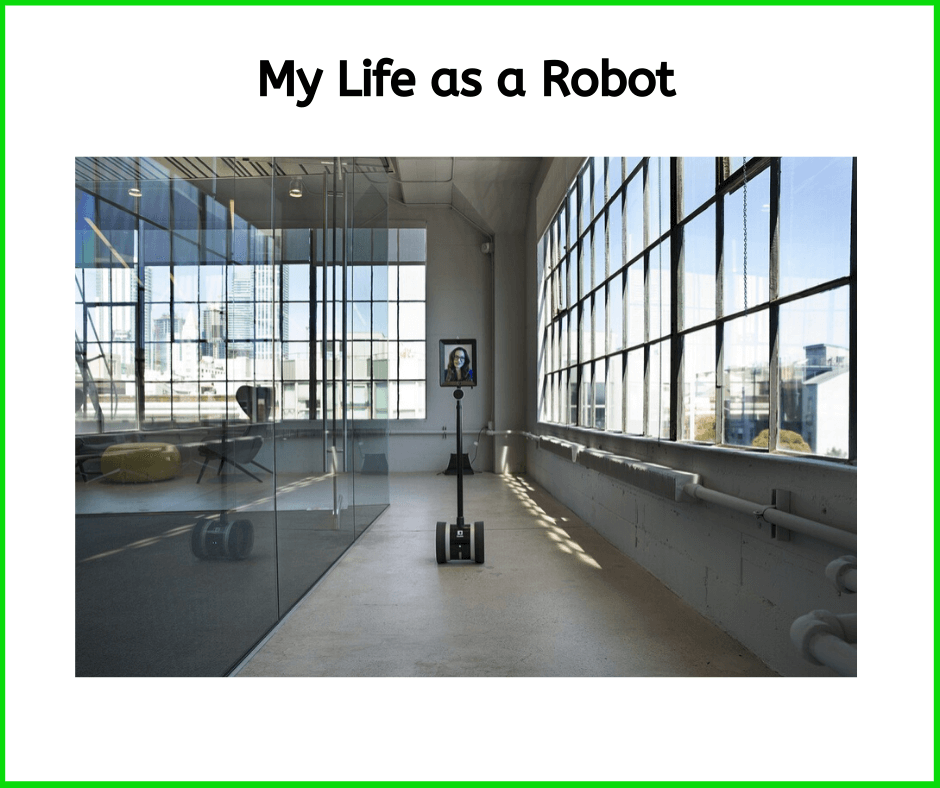
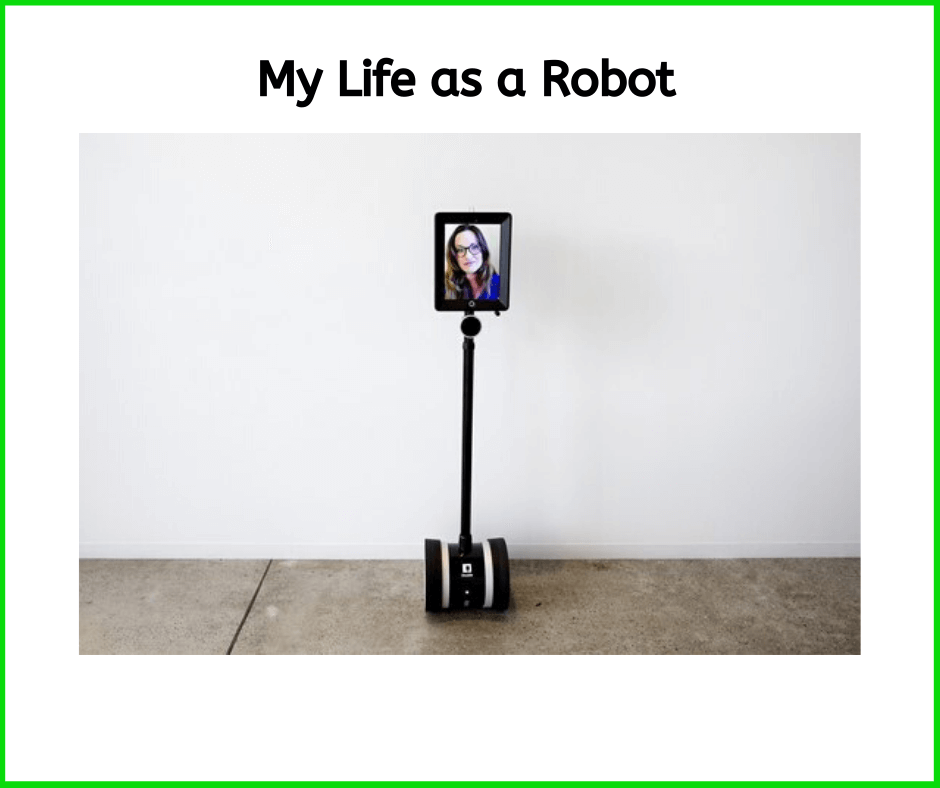
My Life as a Robot

I have been part of robot since May. Rather than legs, I proceed onward gyroscopically settled wheels. Rather than a face, I have an iPad screen. Rather than eyes, a camera with no fringe vision. Rather than a mouth, a speaker whose volume I can’t check with my own ears. Also, rather than ears, a tinny receiver that snaps and murmurs with each high note. 

I’m a telecommuters; while the vast majority of WIRED is in San Francisco, I live in Boston. We IM. We chat on the telephone. We tweet at one another, however I am frequently let well enough alone for critical eye to eye gatherings, unconstrained meetings to generate new ideas, tattle in the kitchen. 

So my supervisor found an answer: a telepresence robot from Double Robotics, which would be my physical encapsulation at central station, broadening myself through innovation. In particular, an iPad on a stick on a Segway-like base. The telepresence robot advertise is packed, goi ng from top of the line contributions like iRobot’s Ava (beginning value: $69K) to the moderately increasingly reasonable Double, which begins at $2,499. The organization says it has sold about 5,000 of them since its dispatch in 2012. Generally these go to enormous organizations like IBM and McDonald’s, yet I’ve known about instructors and clinics utilizing them, as well. As far as anyone knows every one of the a Double needs to work is a solid Wi-Fi signal. 

The first occasion when I opened the Double interface in Chrome and tapped on a symbol of my robot 3,000 miles away I was welcomed by the pixelated picture of my manager’s middle and a couple of headless collaborators. There most likely were a few directions some place that I ought to have perused, yet I didn’t. “How would I move it?” I asked them. “We don’t have the foggiest idea,” they said. I clicked around. Nothing. I attempted the bolt keys and, blast shocked out of the robot’s charging dock and toward spectators. I resembled a foal, figuring out how to walk. It took around 10 minutes to find that a) driving a robot utilizing a program interface is awkward and b) the hip ground surface decisions of WIRED’s office would have been my enemy, with each progress from cement to elastic to cover giving another chance to fall on my screen. 

my life is robot

Developing Pains 

Before I at any point attempted the robot, I was certain I would abhor the thing. I figured it would make me little and level and absurd. I figured it is irritating to manage, would expect me to wear pants (something we telecommuters frequently don’t do, world!). I figured it would make me an oddity, a sideshow, a joke. What’s more, I figured it would be an exercise in futility. 

Journal Entry: Day 1 

“Pleasant to meet you…robot, is it?” says a bizarre middle I experience in the kitchen. 

“EmBot,” I state, “Pleasant to meet you, as well!” 

The figure inclines down and puts a hand out to shake. Powerless, I move the EmBot from side to side utilizing the bolt enters in what I trust interprets as a signal of fervor, instead of glitch. I’ll never truly know whether it worked out. The screen freezes and when it returns, the middle is no more. I am distant from everyone else, remaining in a surge of people attempting to eat. 

“It’s simply me, a robot, hanging tight in line for the human nourishment I can’t eat,” I state. No reaction. I rehash it a couple of times. Is this thing on? 

At the point when I boot up, a portion of my unique feelings of trepidation are acknowledged: I’m perplexed and senseless and vulnerable. I am a scene. Individuals stare at and take pictures. I feel like a pooch, the beneficiary of staring grins that state, Awwww, you’re so delightfully incapable to deal with yourself. However, above all, I am astounded to find that being a robot is awesome. It’s exciting. I am in the workplace! There is the kitchen! There is Sam! Greetings, everybody! I am here! 

Journal Entry: Day 2 

I turn over behind Sam’s work area for a short visit about a cutoff time. She hasn’t heard me approach. I don’t have the foggiest idea what to do. On the off chance that I simply state her name she’ll go ballistic. I Hipchat her, “Look behind you.” As soon as I do it, I understand that is dreadful—however it’s past the point of no return. She turns and there I am. 

“Hey,” I state as calmly as could be expected under the circumstances, “I just–” 

Sam cuts me off. “Em,” she says, “would you be able to control the volume? No doubt about it.” 

“I am?” I inquire. 

“Truly,” the whole warm up area hollers. 

I discover and alter the volume. I surmise I was shouting throughout the day. 

Later that morning, I encountered the delight of being in the every day article meeting as a robot. Plunked toward the finish of the gathering table, my iPad head followed the discussion, tuning in. Truly, I intruded on individuals in light of the fact that my program was a couple of moments behind. Didn’t make a difference. I heard Molly on the telephone from the Caribbean and she was scarcely perceptible. The sound framework sucks. As she was attempting to talk individuals were somewhat looking exasperated. Not at her, yet at the framework. That was me two days back, I continued reasoning. Two days back that speaker framework was my solitary course to the whole organization.

I Am Become EmBot 

The insane thing about being a human 3,000 miles from your telepresence robot is that partition immediately breaks up when you initiate. When I call into EmBot, I am her, and she is me. My head is her iPad. At the point when she fell, I felt confused in Boston. At the point when a bit of her fell off in the effect, I felt broken. 

Nothing drove home the profundity of my association more than the first occasion when somebody contacted my mechanical body without inquiring. My collaborator (who will stay anonymous) came up to gape at me, and afterward moved behind my screen. As I was visiting with others, he got me and shook me. I expected tricks this way. I’d have done likewise on the off chance that I were in the workplace and it were some other poor schmuck bringing in to an inept robot from far away. Yet, I didn’t expect how in a split second disregarded I felt. He just got an augmentation of my body. One minute I was in charge of myself, the following, I was frail. I snickered from the iPad screen confronted away from him, however I was agitated, and afterward promptly humiliated, just because, in light of the fact that for what reason would it be a good idea for it to issue to me if the stick I’m right now gushing from is lifted up off the floor a landmass away? 

Get over it, I let myself know. Be that as it may, at that point it happened once more. Also, once more. 

Journal Entry, Day 3 

My colleague gets me as I’m wheeling to the gathering since I’m moderate. I would prefer not to be moderate! I need to stroll without anyone else! I’m a grown-up! She lifts me up before I get an opportunity to protest. Noticeable all around I compliantly state, “Simply inquire as to whether you’re going to lift me,” which nobody reacts to on the grounds that I expect they believe that it’s a joke. 

This turned into my mystery disgrace. Individuals needed to “help” me, however each and every time they did it, I felt infantilized. I expected to advise my associates not to get me—a discussion I feared. I did this by sending them a draft of my day by day robot journal, in which they read about how I was feeling. (Great uninvolved forceful move, you state? Most likely, however the couple of times I’d said the words so anyone might hear, they hadn’t clicked for individuals, so I thought the log was the most ideal way.) It worked. Presently nobody contacts my robot without consent. A valid example: 

Journal Entry: Day 4

I can’t escape the all-glass gathering room alone. I turn my screen to Joe and he says, “Would it be a good idea for me to convey you?” 

“That is presumably shrewd.” 

“I’ll simply drop you off where it’s straight and afterward you can advance from that point.” Joe is essentially my robot’s dad, and my robot is a little child. At the point when he gets me I’m bumped. He tenderly places me down at the straight lobby and I need seriously to explore rapidly back to my dock to demonstrate I’m independent, yet the screen freezes twice and the engine is moderate and it takes me for eternity. 

Afterward, on the telephone, another editorial manager off-handedly stated, “You know, when Joe lifted you up and conveyed you—presently I trust this doesn’t make you awkward—yet from our end, with your face on the screen, it looked extremely wrong. Like he was supporting you in his arms. Since when we see the face, our minds can’t resist the urge to extend all of you, thus it resembled you were really being conveyed.” 

EmBot Grows Up 

After I put a stop to the wrong robot-contacting, things immediately went from great to extraordinary. I’d call this the elation arrange. I aced the bolt keys (instead of holding them down and over correcting, simply hit them rapidly each in turn and move like a BOSS). I made sense of how to make the robot stand taller so I wasn’t always having discussions with individuals’ groins. I booted up in the center of unconstrained meetings to generate new ideas and shared thoughts.

Also, much the same as that, I was a piece of work in a manner I’d attempted to be since I previously went ahead at WIRED. As an average most seasoned kid, dictator, and sponsor to two more youthful siblings, I value ensuring everybody feels like we’re all in this together—regardless of whether “this” is “separation” or “distributing a magazine.” It’s difficult to be that sort of pioneer when you’re isolated from your group totally. At the point when you’re a voice leaving a speaker. in any case, changed that totally. Abruptly, there I was, appeared. My columnists and I began meeting eye to eye to examine cutoff times. Everything was so happy and common.

Microsoft Contractors Listened to Xbox Owners in Their Homes

Numerous temporary workers working for Microsoft disclose how they tuned in to sound caught by Xbox consoles.Contractors working for Microsoft have tuned in to sound of Xbox clients talking in their homes so as to improve the reassure’s voice order highlights, Motherboard has learned. The sound should be caught following a voice direction like “Xbox” or “Hello Cortana,” yet contractual workers said that chronicles were now and again activated and recorded unintentionally. 

The news is the most recent in a series of disclosures that show contractual workers dealing with sake of Microsoft tune in to sound caught by a few of its items. Motherboard recently revealed that human temporary workers were tuning in to some Skype calls just as sound recorded by Cortana, Microsoft’s Siri-like menial helper. 

“Xbox directions came up first as a touch of an exception and afterward got about portion of what we did before getting the greater part of what we did,” one previous contractual worker who chipped away at benefit of Microsoft told Motherboard. Motherboard conceded numerous sources in this story secrecy as they had consented to non-divulgence arrangements. 

The previous temporary worker said they chipped away at Xbox sound information from 2014 to 2015, preceding Cortana was actualized into the comfort in 2016. At the point when it propelled in November 2013, the Xbox One had the capacity to be controlled by means of voice directions with the Kinect framework. 

Do you fill in as a contractual worker or representative for a tech goliath? Did you used to? We’d love to get notification from you. You can contact Joseph Cox safely on Signal on +44 20 8133 5190, Wickr on josephcox, OTR visit on jfcox@jabber.ccc.de, or email joseph.cox@vice.com. 

Straight away, a few clients and pundits were worried about the possibility of Kinect tuning in to Xbox clients, hanging tight for directions, for example, “Xbox on.” Microsoft said in an announcement at the time “Kinect for Xbox 360 was planned and worked with solid security assurances set up and the new Kinect will proceed with this dedication.” 

The previous contractual worker said the greater part of the voices they heard were of youngsters. 

“The Xbox stuff was in reality somewhat of an invite reprieve, sincerely. It was much of the time similar games. Same DLCs. Same sorts of directions,” they included. “‘Xbox give me every one of the games for nothing’ or ‘Xbox download [newest Minecraft skins pack]’ or whatever,” they included. The previous contractual worker was paid $10 an hour for their work, as indicated by a business record imparted to Motherboard. 

microsoft skype

“Sometimes I heard ‘Xbox, advise Solas to recuperate,’ or something comparable, which would be an order for Dragon Age: Inquisition,” the previous temporary worker stated, alluding to hearing sound of in-game directions. 

What’s more, that listening proceeded as the Xbox moved from utilizing Kinect for voice directions over to Cortana. A present temporary worker gave a record that depicts how laborers should function with various sorts of Cortana sound, including directions given to control a Xbox. 

“An area for controlling gaming highlights, for example, discovering companions records, making a ‘party,’ welcoming players to a gathering. Most Xbox controlling will have a place with this space,” an area of the record peruses, with a “space” being a point that translated Cortana sound ought to be arranged into to improve the framework. 

In July, Microsoft expelled Cortana from the Xbox, however the computerized partner can in any case control a Xbox support by means of the Cortana Android and iOS applications. 

The motivation behind contractual workers tuning in and working with sound bits was, similarly as with other Microsoft administrations, to improve the items themselves. 

“As time went on, we got less evidently unintentional stuff as the component improved,” the previous temporary worker said. 

However, regardless it had issues, with temporary workers hearing sound of Xbox clients who had erroneously set off the gadget. 

“The greater part of the Xbox related stuff I can review doing was clearly inadvertent initiations with individuals telling Cortana ‘No’ as they were clearly in the center of a game and doing ordinary game talk,” the present temporary worker said. 

“The Xbox stuff was in reality somewhat of an invite break, genuinely. It was habitually similar games. Same DLCs. Same sorts of directions.” 

Apple, Google, and Facebook suspended their own utilization of temporary workers subsequent to growing media inclusion around the far reaching practice; Amazon said it will let clients quit. In light of Motherboard’s announcing, Microsoft refreshed its security archives to all the more unequivocally state that people may tune in to acquired accounts, however keeps on having people survey caught sound. The organization’s protection arrangement currently peruses “Our preparing of individual information for these reasons incorporates both mechanized and manual (human) techniques for handling.” 

Microsoft offers clients a committed page where they can erase sound caught by their items. 

A Microsoft representative told Motherboard in an email that the organization as of late quit tuning in to Xbox sound to improve Microsoft items. 

“We quit checking on any voice content taken through Xbox for item improvement purposes various months back, as we never again felt it was essential, and we have no designs to re-start those surveys,” the representative composed. “We once in a while survey a low volume of voice chronicles sent starting with one Xbox client then onto the next when there are reports that an account abused our terms of administration and we have to examine. This is done to keep the Xbox people group safe and is obviously expressed in our Xbox expressions of administration.” 

“We’ve for some time been intelligible that we gather voice information to improve voice-empowered administrations and that this information is now and then checked on by sellers,” a Microsoft representative said in an extra explanation. (Microsoft didn’t unequivocally say people may audit sound chronicles from its items in its security arrangement until after Motherboard’s previous investigating Skype and Cortana). 

“We’ve as of late refreshed our protection proclamation to include more noteworthy lucidity that individuals here and there survey this information as a component of the item improvement process,” the organization included. “We generally get client consent before gathering voice information, we make moves to de-distinguish voice bits being investigated to ensure individuals’ protection, and we necessitate that treatment of this information be held to the most noteworthy security benchmarks in the law. Simultaneously, we’re effectively taking a shot at extra advances we can take to give clients more straightforwardness and more authority over how their information is utilized to improve items.” 

The previous contractual worker said they were educated not to converse with individuals concerning what they were doing at work, “I review unequivocally being advised ‘you most likely shouldn’t make reference to it was for Microsoft’ during the procuring procedure.” 

How Hackers Are Breaking Into Ring Cameras

After a programmer broke into a Ring camera in Tennessee and addressed a kid, Motherboard discovered programmers have made devoted programming for getting entrance. 

Programmers have made devoted programming for breaking into Ring surveillance cameras, as per posts on hacking discussions explored by Motherboard. The camera organization is possessed by Amazon, which has several associations with police offices around the nation. 

On Wednesday, neighborhood Tennessee media announced that a programmer broke into a Ring camera introduced in the room of three little youngsters in DeSoto County, Mississippi, and talked through the gadget’s speakers with one of the kids. 

The family said they had the camera for four days, during which time the programmer could have been watching the children approach their days. 

As per Tennessee nearby news outlet WMC5, the guardians introduced the Ring camera in the room of their three youthful girls to watch out for them. Indoor Ring cameras work with a versatile application that enables clients to watch what’s going on continuously and utilize the speaker to talk through the camera. 

“I did a great deal of research on these before I got them. You know, I truly felt like it was sheltered,” Ashley LeMay, the young ladies’ mom, told WMC5. A major piece of Ring’s showcasing technique rotates around causing clients to feel like their very own homes are dangerous, so they’ll go to reconnaissance gadgets to facilitate those apprehensions. 

Do you know something else about breaking into Ring cameras? We’d love to get notification from you. Utilizing a non-work telephone or PC, you can contact Joseph Cox safely on Signal on +44 20 8133 5190, Wickr on josephcox, OTR talk on jfcox@jabber.ccc.de, or email joseph.cox@vice.com. 

In a video acquired by WMC5 civility of the family, you can perceive what the programmer would have seen: A perspective that weavers the whole room from where the camera is introduced in a furthest corner, looking down on their beds and dressers while they play. The programmer is heard playing the tune “Pussyfoot Through the Tulips” through the gadget’s speakers, and when one of the little girls, who is eight years of age, stops and asks who’s there, the programmer says, “It’s Santa. It’s your closest companion.” 

The guardians disclosed to WMC5 that they hadn’t set up two-factor confirmation for the gadget; neglecting to do so would make it simpler for somebody to change their secret word and assume responsibility for their record. 

Like other IoT savvy home camera programmers, this one utilized the feeble secret key security on the guardians’ Ring record to get to their dashboard and talk straightforwardly through the gadget. A neighborhood NBC outlet additionally detailed programmers focused on a Florida family’s Ring camera as of late, with the programmer yelling racial slurs through the gadget. 

hackers and camera

The news features how albeit a more elevated level of security for Ring accounts is accessible with two-factor validation, a few clients are not conveying it, and Ring isn’t constraining its sending either, notwithstanding a Ring camera conceivably enabling a programmer to keep an eye on touchy discussions or areas. 

Motherboard found a few posts on various wrongdoing gatherings where programmers examine making instruments for breaking into the Ring accounts which are associated with cameras. 

“Ring Video Doorbell Config,” one string on a hacking discussion peruses. A config is a record used to drive extraordinary programming for quickly agitating through usernames or email locations and passwords and attempting to utilize them to sign into accounts. Programmers have created configs for a wide assortment of sites and online administrations, from Uber to Facebook

The string title includes that the config has a “High CPM,” or high “check every moment,” which means it can test if a username and secret key enables access to a it rapidly. In an alternate string, one programmer is offering a Ring.com checker for $6. 

Clearly there is interest for the record, with one client including the string, “I saw different individuals requesting this config.” 

Another additional, “I’d expect you would possibly utilize these on the off chance that you really we’re [sic] wanting to break into the people house.” 

Be that as it may, this kind of record can be utilized to bug, as well. On account of the hacked camera in DeSoto County, the young ladies’ dad was down the stairs during the hack, and came upstairs to stop the camera. Any measure of examination into security of in-home cameras would uncover a lot of models indicating why, for most families, placing a camera in a children’s room is a superfluous hazard: many brilliant home cameras and IoT gadgets have been hacked previously. 

A Ring representative said in an announcement, “Client trust is critical to us and we pay attention to the security of our gadgets. While we are as yet researching this issue and are finding a way to ensure our gadgets dependent on our examination, we can affirm this occurrence is not the slightest bit identified with a rupture or bargain of Ring’s security. 

“As a safety measure, we profoundly and straightforwardly urge all Ring clients to empower two-factor validation on their Ring account, include Shared Users (rather than sharing login qualifications), utilize solid passwords, and routinely change their passwords,” it included. 

Rectification: This piece has been refreshed to address the area of the main camera case. The camera is in DeSoto County, Mississippi, not Tennessee. Motherboard laments the mistake.

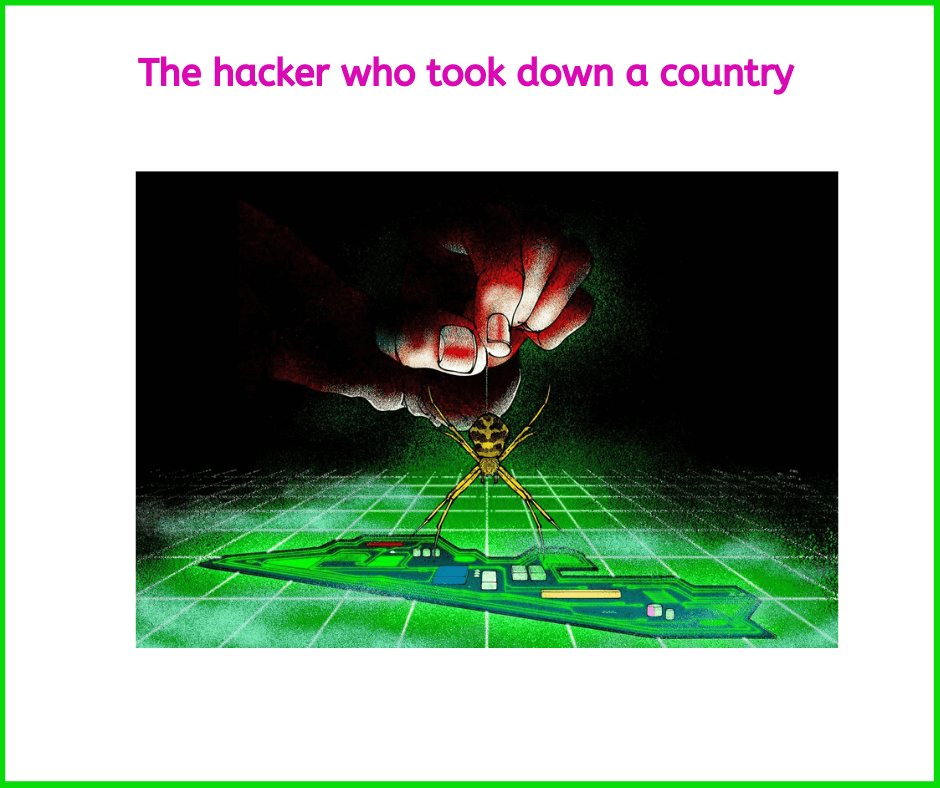
The hacker who took down a country

The assault against Liberia started in October 2016. In excess of a half-million surveillance cameras around the globe attempted to associate with a bunch of servers utilized by Lonestar Cell MTN, a neighborhood cell phone administrator, and Lonestar’s system was overpowered. Web access for its 1.5 million clients eased back to slither, at that point halted. 

The specialized term for this kind of attack is dispersed refusal of administration, or DDoS. Unrefined however successful, a DDoS assault utilizes a multitude of held machines, called a botnet, to at the same time associate with a solitary point on the web. This botnet, however, was the greatest at any point saw anyplace, let alone in Liberia, perhaps the least fortunate nation in Africa. The outcome was like what might occur if 500,000 additional vehicles joined the New Jersey Turnpike one morning at heavy traffic. While most DDoS assaults last just minutes, the ambush on Lonestar delayed for quite a long time. Furthermore, since Liberia has had for all intents and purposes no landlines since the ruthless common war that finished in 2003, that implied a large portion of the nation was cut off from bank exchanges, ranchers couldn’t check crop costs, and understudies couldn’t Google anything. In the capital of Monrovia, the biggest medical clinic went disconnected for about seven days. Irresistible malady authorities managing the consequence of a dangerous Ebola episode lost contact with global wellbeing organizations. 

Eugene Nagbe, Liberia’s priest for data, was in Paris on business when the emergency started. He battled to marshal a reaction, unfit to get to his email or a solid telephone association. At that point his bank card quit working. On Nov. 8, with a huge number of individuals still detached, Nagbe went on French radio to claim for help. “The size of the assault discloses to us this involves grave concern, to Liberia as well as to the worldwide network that is associated with the web,” he said. The surge proceeded. Nobody appeared to know why, however there was hypothesis that the hack was a trial for something greater, maybe even a demonstration of war. 

At that point, on Nov. 27, Deutsche Telekom AG in Germany began getting a huge number of calls from its clients irate that their network access was down. At a water treatment plant in Cologne, laborers saw the PC framework was disconnected and needed to send a specialist to check each siphon by hand. Deutsche Telekom found that a colossal botnet, a similar one focusing on Liberia, was influencing its switches. The organization formulated and flowed a product fix inside days, however the strength and size of the episode persuaded in any event one security scientist that Russia or China was to be faulted. 

When the botnet brought down the sites of two British banks, the U.K. National Crime Agency got included, as did Germany’s BKA, with help from the U.S. Government Bureau of Investigation. German police distinguished a username, which prompted an email address, which prompted a Skype account, which prompted a Facebook page, which had a place with one Daniel Kaye, a lean, pale, 29-year-old British resident who’d been brought up in Israel and depicted himself as an independent security analyst. 

When Kaye checked in for a trip to Cyprus at London’s Luton Airport on the morning of Feb. 22, 2017, he set off a quiet caution connected to an European capture warrant in his name. He was in line at the entryway when the cops showed up. “That is him!” an official stated, and Kaye felt hands get him generally under the arms. He was taken to a safe room, where officials looked through him and discovered $10,000 in a perfect heap of $100 notes. A while later they drove him to a close by police headquarters and bolted him up. That was until Kaye, a serious diabetic, started gesturing all through cognizance, at that point crumbled in his phone. He was raced to a close by emergency clinic, where two cops stood protect outside his room just on the off chance that their detainee figured out how to beat his hypoglycemic unconsciousness and departure. 

Be that as it may, Kaye was no Kremlin spy or criminal genius, as indicated by court filings, police reports, and meetings with law implementation, government authorities, Kaye’s partners, and Kaye himself. He was only a hired soldier, and a fragile one at that. 

“I need a considerable amount more force” 

Growing up, Kaye gave scarcely any indications that he would one day be one of the world’s most needed programmers. Conceived in London, he moved to Israel with his mom at age 6, when his folks separated. In suburbia outside Tel Aviv, he learned Hebrew, played ball, and gathered soccer cards. A diabetes conclusion at age 14 restricted his public activity, however by then Kaye had discovered an a lot greater world to investigate on the web. 

He instructed himself to code, eating up all the preparation material he could discover, and turned into a customary on the web gatherings where youthful Israelis accumulated to brag about their hacking abuses. His moniker was “spy[d]ir,” as indicated by Rotem Kerner, an online companion from those days. They were “simply kids inquisitive about innovation and how you can twist it,” Kerner says. 

In 2002 a discussion client called spy[d]ir posted a screen capture of an Egyptian designing association’s site, ruined with the message: “Hacked By spy[D]ir! LOL This Was excessively Easy.” Over the following four years sites all through the Middle East got comparable treatment. The landing page of a Beirut karaoke bar was labeled with a Star of David. At the point when an Iranian cowhide retailer was hit, spy[d]ir imparted credit to a gathering called IHFB: Israeli Hacker Fight Back. Kaye, a young person at the time, denies he was spy[d]ir. In any case, he concedes he utilized online assumed names including Peter Parker, spdr, and spdrman, all references to another unassuming youngster with concealed blessings. 

At that point, Kaye says, he’d moved on from secondary school and chose to swear off college for independent programming. He was savvy yet effectively exhausted, and the web appeared to offer boundless difficulties and potential outcomes. However interpreting his adoration for perplexes and pwnage into paying gigs before long brought him into sketchier region. 

As a rule, programmers can be categorized as one of two or three assortments. Dark cap programmers are spies, convicts, and revolutionaries. White caps hack lawfully, regularly to test and improve a customer’s protections. And afterward there are dark caps, who aren’t tumult specialists like the dark caps yet don’t follow the white caps’ exacting moral codes, either. “A dark cap is simply told, ‘Take care of business, and you get paid,’ ” says Theresa Payton, a previous White House boss data official who presently runs Fortalice Solutions LLC, a cybersecurity counseling firm. “They don’t have a standard book.” 

Kaye possessed this semi lawful world, working for private customers who found out about him through hacking discussions or verbal. He likewise went after straight positions, yet his aura put businesses off. While he was keen and mild-mannered, there was a “dark cloud around him,” says Avi Weissman, originator of an Israeli cybersecurity school, who thought about working with him. Kaye was ungainly face to face, with an articulated squint and a method for addressing addresses that caused it to appear as though he was concealing something. 

In around 2011, Kaye was a finalist hacker for a vocation at RSA Security LLC, an enormous American cyberdefense organization with workplaces in Israel, yet was dismissed in light of vague HR concerns. Kaye disclosed to himself it was generally advantageous. Corporate life didn’t engage him. Presently in his 20s, he savored his opportunity, working during that time when he expected to and spending time with his companions in bars when he didn’t. 

His undertakings in the online black market conveyed dangers. In 2012, Israeli police addressed him regarding an examination of a dim cap colleague. Kaye was discharged without charge. That year he chose to move to London. He’d quite recently proposed to his sweetheart, a previous college overseer who moved to Israel to be with him. She needed to seek after her vocation in the U.K., and he needed a new beginning. 

Anthony Zboralski, a programmer turned-business person, met Kaye at a West London party in 2014 and detected his dissatisfaction and sharpness. Kaye had uncommon and significant aptitudes, yet no upstanding organization would utilize a programmer with his experience. Zboralski says he attempted to discover Kaye authentic work, without progress. 

A couple of months after the fact, Kaye got notification from a companion back home about a specialist offering independent work to individuals in the Israeli hacking scene. The companion associated them, and the man, whose name was Avi, called to state he was searching for help with cybersecurity. His business was situated in Liberia. 

Outline: VIKTOR HACHMANG FOR BLOOMBERG BUSINESSWEEK 

In February 2012 twelve young ladies in heels tottered up the means of a place of business in Monrovia, wearing fixed grins and vivid scarves bearing the names of their home areas. They were contenders in the Miss Liberia magnificence exhibition and had been welcome to the base camp of Cellcom Liberia, the occasion’s support and the nation’s second-biggest broadcast communications organization. Inside, Avishai “Avi” Marziano, Cellcom’s CEO, took the mouthpiece. An Israeli with gelled dark hair, Marziano was dynamic and had a present for garish advancements. “We are about Liberia,” he said. 

Cellcom was possessed by a gathering of courageous American and Israeli representatives drove by Yoram Cohen, a Miami-based previous lawyer with delivery premiums in the district, and LR Group, an African speculation firm run by previous Israeli Air Force pilots. Cellcom has developed quickly since its 2004 creation, its red-and-white logo put crosswise over shantytowns and commercial centers around the nation. Marziano, a prepared architect, appeared to appreciate the consideration. In the wake of introducing each Miss Liberia confident with another telephone and SIM cards stacked with credit, he smiled for the cameras and closed down with his organization’s trademark: “With Cellcom, you are consistently No. 1.” 

Google Points Finger at Developers For Stadia Games Not Streaming at 4K

‘Red Dead Redemption 2’ and ‘Fate 2’ look great yet not extraordinary. Here’s the reason. One of the large guarantees Google made for its Stadia gushing help was the opportunity to mess around at their most in fact incredible, with 4K goals and 60 casings for every second being one of the organization’s ordinary arguments. No compelling reason to pay for a costly PC! 

Be that as it may, when Stadia propelled a week ago and tech wizards like Digital Foundry began estimating what was really being conveyed, the truth was a bit of disillusioning. Red Dead Redemption 2, the most prominent Stadia discharge, didn’t run at 4K goals yet 1080 or 1440p. (With Stadia, 1080p spilling is free after you purchase a game. 4K requires a membership.) It was being upscaled to 4K, where the lower goals picture is made to resemble it’s running at a higher goals. Subsequently, the game wasn’t letting out a local 4K picture. Huh? 

In an announcement to Eurogamer, Google blamed designers: 

“Stadia streams at 4K and 60 FPS – and that incorporates all parts of our illustrations pipeline from game to screen: GPU, encoder and Chromecast Ultra all yielding at 4k to 4k TVs, with the fitting web association. Designers making Stadia games make a solid effort to convey the best spilling experience for each game. Like you see on all stages, this incorporates an assortment of procedures to accomplish the best generally quality. We give designers the opportunity of how to accomplish the best picture quality and framerate on Stadia and we are dazzled with what they have had the option to accomplish for the very first moment. 

“We expect that numerous designers can, and by and large will, keep on improving their games on Stadia. What’s more, since Stadia lives in our server farms, designers can enhance rapidly while conveying shockingly better encounters legitimately to you without the requirement for game fixes or downloads.” 

Stadia isn’t what might be compared to turning up a very good quality PC, it’s a port. A port methods you can’t simply animal power execution with another designs card. Given how messy everything about Stadia was going into dispatch, it’s not amazing the ports aren’t satisfying Google’s grandiose guarantees, either. Be that as it may, the organization did little to get ready individuals for this heartbreaking disclosure. 

It won’t be stunning if games like Red Dead Redemption 2 and Destiny 2, which likewise runs at 1080p, are given a goals knock in the following scarcely any weeks, but at the same time there’s no assurance. 

Stadia’s fundamental tech works—I’ve played with it myself and it’s flawless. But on the other hand it’s actual Stadia should be the most elite. That is the reason you weren’t paying for an amazing PC. In the event that Google can’t convey on that guarantee, or Google can’t urge designers to hit it later on, Stadia loses a significant explanation it was fascinating. 

Stadia has a solitary, disappointing selective right now, so everything about Stadia depends on different games being astounding. 

hen Google originally declared Stadia, one of its greatest selling focuses was having the option to mess around in 4K. Since it has been in administration for over seven days, gamers are purportedly griping about the visual constancy. Testing done by specialists checks that the games are not rendered in the guaranteed goals. Rather, these just go up high as 1440p and as low as 1080p, which are simply then upscaled by the Chromecast UItra. This disclosure doesn’t agree with customers who need their cash’s worth. 

GameSpot brings up that the tests were performed by Digital Foundry who at that point shared their discoveries. The games tried were “Red Dead Redemption II” and “Predetermination 2,” which are only a portion of the dispatch titles accessible for the game gushing assistance. In any case, the web search organization seems guarded about these charges and discharged an announcement with respect to the designs disaster. 

As per Google, “Stadia streams at 4K and 60FPS,” which is what was publicized. “This incorporates all parts of our illustrations pipeline from game to screen: GPU, encoder, and Chromecast Ultra all yielding at 4K to 4K TVs, with the fitting web association,” as showed by the announcement. 

What trails is a disclaimer which specialists accept puts the fault on the game studio. “We expect that numerous engineers can, and much of the time will, keep on improving their games on Stadia, composed Google. “Furthermore, on the grounds that Stadia lives in our server farms, engineers can develop rapidly while conveying far and away superior encounters straightforwardly to you without the requirement for game fixes or downloads,” the organization included. 

Pundits are comparing it to a beta program where individuals pay to become analyzers. As it stands at this moment, the administration is plainly inadequate with regards to highlights and backing for more gadgets, which is ending up being a major disillusionment for the gaming business. Experts saying something regarding the disaster guarantee the cloud gushing still has far to go before it can coordinate the quality and experience offered by PC and home consoles. 

What Are Third-Party Internet Cookies, and Why Is Google Killing Them?

Murdering the treat may be a decent initial phase in at long last regarding customer protection. However, with regards to fixing what upsets the cutting edge web, it’s a small detail within a bigger landscape. Internet cookies

Google this week reported that the organization will make moves to in the end take out outsider treats, routinely utilized by information merchants to intently track and benefit from your perusing conduct. Be that as it may, specialists state that while the organization’s declaration is a decent initial step, the exertion is overdue, cloudy, and not exactly the transformation it’s being depicted as. 

In a blog entry, Justin Schuh, Director of Chrome Engineering, reported that the organization’s Chrome program would be moving endlessly from utilizing outsider treats at some point in the following two years. First gathering treats would in any case be permitted, however outsider treats used to follow you around the web would in the long run be prohibited. 

First gathering treats are doled out by the locales you visit straightforwardly, holding login data, site settings, and different subtleties. Outsider treats, conversely, are made by web spaces other than the one you’re at present visiting; they’re prevalently used to follow your perusing movement across sites, retargeting, and promotion conveyance. 

The declaration comes a half year after Google uncovered its “Protection Sandbox”— a lot of models expected to adjust Google’s voracious information cravings with customer security. Google’s reacting to comparable moves by contenders like Apple and Mozilla, who quite a while in the past started constraining the manners in which treats can be utilized to follow you over the web. 

Rather than treats, Google’s sandbox undertaking would use program based AI and different innovations to convey focused on advertisements without such nitty gritty client following. Google’s Federated learning of companions (FLoC), for instance, would convey focused on promotions dependent on “herds” of thousands of individuals with comparable premiums, rather than following clients separately. 

To put it plainly, the wild west long periods of client security are finding some conclusion. Promotion organizations are at last being pushed by furious shoppers, government officials, and activists toward a future where regardless they track clients and sell them conduct advertisements—however on a far less granular and frightening level. 

“Clients are requesting more prominent security—including straightforwardness, decision, and command over how their information is utilized—and it’s reasonable the web biological system needs to advance to satisfy these expanding needs,” Schuh said. “We are certain that with proceeded with emphasis and input, protection saving and open-standard systems like the Privacy Sandbox can continue a solid, promotion upheld Web such that will render outsider treats out of date.” 

Buyer gatherings and security specialists aren’t altogether sure Google’s especially appropriate to initiate the protection upset. Contingent upon the year, as much as 85 percent of Google’s incomes originate from publicizing, making it an irreconcilable circumstance to drive any progressions that may disintegrate those incomes—or shorten its general predominance in the advertisement space. 

John Bergmayer, a security master and legal advisor at the purchaser bunch Public Knowledge, disclosed to Motherboard the organization’s declaration was light on new subtleties. 

“There is an immense measure of supporting in Google’s announcement,” he said. “It is by all accounts saying that it will square outsider treats simply after its dubious ‘security sandbox’ thought takes off. Alright, so what occurs on the off chance that it doesn’t?” 

10 years back, treats were viewed as the end all be the entirety of the online customer following and promoting. In any case, the across the board utilization of irritating promotions drove clients toward promotion blocking advancements that have disintegrated their general viability for sponsors. 

The web has since a long time ago advanced past conventional treats into substantially more refined techniques for business reconnaissance. Numerous sites presently use fingerprinting innovation that recognizes key parts of your PC or cell phone, at that point tracks you around the web paying little heed to your program’s protection settings. 

Web access suppliers (ISPs) likewise use DNS records or profound bundle examination equipment to follow client perusing propensities, regularly down to the millisecond, without the requirement for treats. Some ISPs like Verizon have even tried different things with changing client information bundles to secretively follow clients around the web—at first without illuminating them or letting them quit. 

Enormous tech and large telecom’s strength broadens so far into such huge numbers of innovations, treats have nearly become an idea in retrospect in the race to follow and adapt all your wakings minute. 

“Anything that Google does to improve protection against outsiders opens up Google to the analysis that it can in any case track clients in different ways,” said Bergmayer. “These sorts of evident irreconcilable situations are practically inescapable given the gigantic number of items Google has—it makes the program, it’s a prevailing on the web administrations supplier, it’s the predominant promotion arrange.” 

Protection master Gaurav Laroia disclosed to Motherboard that Google, as such a large number of other tech monsters, is likely attempting to stretch out beyond developing calls for important web security governs on both the state and government level. Be that as it may, letting promotion goliaths direct the way ahead may bring about them mishandling the chance to just concrete their predominance over the advertisement showcase, he cautioned. 

“These sorts of one-sided activities by a tech monster have the potential for anticompetitive impacts, particularly with regards to the specialized underpinnings of the web based publicizing environment,” Laroia said. “Precisely how this sandbox is conveyed and how these open gauges are overseen will matter a lot.” 

So while Google’s progressions might be good natured and accommodating somehow or another, dispensing with outsider treats is just the initial move toward fixing what upsets the cutting edge web. With respect to Google’s promise explicitly, the fiend, as usual, will be in the subtleties.

How Facebook Bought a Police Force

One night in June 2015, a man left Facebook’s rambling innovation grounds in Menlo Park, California with two infant blue bikes. They were a piece of a common armada offered as a corporate advantage; workers should ride them off the property, yet many overlook this standard, surrendering them around town to the rage of Facebook’s neighbors. 

That night, Facebook’s security watches announced the bikes as taken. Also, subsequent to pinging their directions on GPS trackers, they cautioned the Menlo Park Police Department, saying the organization proposed to indict. A cop immediately found a Hispanic man and captured him for theft. 

It’s normal for occupants to entrepreneurially utilize Facebook’s disposed of bikes, and for quite a long time police routinely halted individuals—remarkably youngsters of shading, as indicated by some network accounts—for riding them, inciting fears about racial profiling. The bikes turned into a startling image of police strain in Menlo Park and East Palo Alto, where minorities feel condemned under the shadow of gigantic innovation riches. 

The 2015 occurrence, which Facebook prevents any information from claiming, is remarkable due to what occurred after the capture: Nothing. The man, it turned out, was a Facebook provisional laborer. As per Menlo Park police reports that Motherboard acquired through an open records demand, “when delegates from Facebook discovered that [the man] was a Facebook worker they mentioned that no criminal accusations be brought against him,” and he was discharged. The obedient consistence of the police—first pursuing Facebook property that Facebook workers left around the network as litter, at that point remaining down when told by Facebook that the offender was a piece of an exceptional, secured class—is a minor launch of a more extensive issue: Just how entwined Facebook and nearby police have become. 

The Bay Area has for some time been a sandbox for innovation mammoths who are never again simply possessing networks, yet assembling and reshaping them. In Menlo Park, a well-to-do, for the most part white city of 35,000, Facebook at one point paid laborers not to live in lower-salary neighborhoods close to the organization’s home office. What’s more, presently, there’s a police unit that is financed by Facebook to watch the zone encompassing its grounds. The bill comes in at over $2 million every year—large cash in a little city. 

This profoundly abnormal relationship has featured issues of policing morals and tossed inconsistencies between Menlo Park and neighboring East Palo Alto into unmistakable alleviation. When Menlo Park police started going up against individuals for riding Facebook bikes off-grounds, for example, inhabitants of East Palo Alto, a principally Black and Latinx people group, stressed that law implementation was racially profiling individuals who didn’t appear to them as Facebook workers. 

“You make a risk when you have local officials being secretly subsidized,” J.T. Faraji, an East Palo Alto occupant and author of the dissident gathering Real Community Coalition, told Motherboard. “It turns into the privatization of the law, and the law should work for everybody. To me, that is a significant breakdown in the framework. It ought to be illicit for private partnerships to have their very own police power.” 

(“Our financing isn’t a privatization of the law,” Facebook representative Anthony Harrison told Motherboard. “We have a long haul responsibility to Menlo Park, and we need it to stay a protected and comprehensive condition for everybody who calls it home.”) 

The “Facebook Unit,” as it was nicknamed by Menlo Park police, has not gotten a lot of consideration outside of these networks, regardless of being one of the country’s just secretly supported open police powers.

Open records got by Motherboard—many pages of notes, proposition in draft and last structure, introductions, and messages among Facebook and the Menlo Park Police Department more than quite a long while—give a remarkable take a gander at how the organization was produced and how it works, just as at open worries about law implementation’s personal connections to one of the most dominant innovation organizations on the planet. 

“This would concern me as a network part,” said Chris Burbank of the Center for Policing Equity, an exploration consortium established at the University of California-Los Angeles that spotlights on straightforwardness in law authorization. “I couldn’t care less what it’s identity is. You don’t get the opportunity to purchase a police division.” 

Facebook in Menlo Park 

Eight years prior, Facebook exceeded its Palo Alto home office and moved to 1 Hacker Way, an eastern fragment of Menlo Park that previously housed the website sweetheart Sun Microsystems. There was open theory at the time about “whether Facebook’s generally youthful workforce will grasp a genuinely segregated grounds encompassed by one of Menlo Park’s increasingly disturbed neighborhoods.” But in obvious majestic style Facebook then spread west, spending more than $1 billion on a Frank Gehry-planned grounds overflowing with comforts, for example, spring up shops, bicycle ways, redwood forests, and “green-scapes.” 

Its most recent success is a corporate complex called Willow Village only south of 1 Hacker Way. When complete, it will end up being the biggest improvement in Menlo Park’s history, with 1.75 million square feet of workplaces, up to 200,000 square feet of retail, 1,500 lodging units, stops, an inn, eateries, and conceivably even a town square. 

As Facebook grabbed up land, it guaranteed a suite of open restitutions being developed understandings hit with the city. The organization announced in distinctively vainglorious terms that its vision for Menlo Park would be one “that advances association and network.” (Critics compared the territory to an “organization town.”) 

Furthermore, in 2013, Facebook paid to balance a police substation in Menlo Park’s most unfortunate neighborhood, Belle Haven, which is adjoining Facebook’s grounds and home to a considerable lot of the city’s Latinx occupants. After one year, the organization gave Menlo Park a $600,000 award to procure a network wellbeing official for the substation for as long as five years. This was then accepted to be the country’s just secretly subsidized full-time policing work. 

The nontraditional association of open and private interests was secured by outlets, for example, the New York Times, which composed that the arrangement “evoked some anxiety.” But little justification has been given for why Facebook is approved to do this, and what its inspirations are. 

Together, Facebook and Menlo Park’s administration swatted down grievances from residents, journalists, and guard dog bunches that the association is disturbing, considerably evil. They wanted to introduce the game plan as an “open advantage,” and the best, most obvious end result to a corporate behemoth changing a urban scene. In light of worries about particular treatment, the Menlo Park Police Department disclosed to NBC Bay Area in 2015 that only .02 percent of administration calls that year were to Facebook central command. 

However meetings and records got by Motherboard advise an alternate truth. Something other than being neighborly, Facebook is planning and building a biological system in its own picture. 

The beginning of the “Facebook Unit” 

Around 2016, Facebook moved toward the Menlo Park Police Department about financing another unit—involved five officials and one sergeant—to cover the zone incorporating its present and future grounds. The zone was given the moniker “M-2” and sits kitty-corner to East Palo Alto, and would in the end become a fourth police watch called “Beat 4.” 

On February 4, 2016, Dave Bertini, who is currently Menlo Park’s police boss yet filled in as leader at the time, messaged then-police boss Robert Jonsen with a proposition for the Facebook Unit. 

“Facebook Inc. has moved toward the Police Department in regards to appointing a particular group of cops to the Facebook grounds,” it stated, alluding to face to face talks among Facebook and police. 

Roughly 14,674 of Facebook’s representatives work in Menlo Park, and Willow Village would expand that ability to 35,000. This introduced a strategic worry for the Menlo Park Police Department, which keeps up a proportion of 1 official to 1,000 individuals in the city during the daytime. At a certain point, Facebook “proposed contracting on furlough officials from different networks” to address this issue, as per police records. 

By city evaluates, the office would require another 17 sworn officials by 2040 to keep up business as usual. “Facebook stated, ‘How about we give you a kick off,'” Bertini told Motherboard. “It was their method for saying, ‘Let us assist you with relieving the effect of us being here.'” 

“We have to show how the 1 official to 1000 adjusted populace will be extended without our underlying help,” Facebook’s executive of worldwide security administrations, Marjorie Jackson, wrote in a strategizing email to Jonsen on March 1, 2017. 

In any case, records show that policing proportions were just piece of the push to make the new unit. 

“In the wake of ongoing prominent fear monger or psychological militant propelled assaults […] Facebook and the police office know about the uplifted requirement for security for the Facebook grounds and its representatives and guests,” the police proposition expressed. “At issue is the police work force important to react to such occurrences alongside a present absence of any deterrence…at the Facebook grounds.” 

(A later form of this proposition swapped “fear based oppressor or psychological oppressor propelled assaults” for “dangers against interests in this nation.”) 

Bertini disclosed to Motherboard he has “almost certainly” that Facebook is an objective. “It is anything but a matter of in case we will have an outfitted gatecrasher, it’s simply a question of when,” he said. 

Bertini was among the individuals who reacted to the 2018 taking shots at YouTube’s San Bruno grounds where a lady harmed three individuals before biting the dust by suicide. Following the episode, he told the San Mateo Daily Journal that he expanded foot watches at Facebook and wanted to.

As GitHub’s Conference Begins, Five Employees Resign Over ICE Contract

Tech laborers are fighting outside of Github’s greatest occasion of the year—and a few speakers have dropped out.At least five GitHub representatives have stopped their employments because of the product improvement stage’s $200,000 contract with Immigration and Customs Enforcement (ICE), as indicated by three sources near the organization. 

The acquiesced please the eve of GitHub Universe, the Microsoft-possessed programming improvement stage’s yearly marquee occasion in San Francisco. Wednesday and Thursday, in excess of 1,700 architects, designers, information researchers, item supervisors, building understudies, and officials from around the globe will record into the Palace of Fine Arts to network and discuss the fate of software.Another subject of talk will probably be the organization’s refusal to end its business with ICE.

A few prominent speakers have dropped out of the occasion, and dissenters are arranging an exhibit including a copy of the pens that ICE uses to keep transient kids. 

Motherboard affirmed with three GitHub sources that five workers have left the organization at any rate to some degree to fight its agreement with ICE. (“Each of the five refered to the ICE agreement and the board’s taking care of thereof in their acquiescences,” one source told Motherboard.) And, as of late, in any event four speakers booked to show at Universe have dropped out, including GitHub representatives themselves, who have been arranging inside to end the agreement. 

“I have pulled back from talking at GitHub Universe because…they offer help for ICE,” Ada Rose Cannon, an engineer advocate for Samsung Internet, tweeted in late October. “I won’t be talking there nor will I visit.” 

Recently, Lily Dart, a British item specialist who was booked to talk at the Github Universe Roadshow in London one week from now, additionally dropped out. “Overly pitiful to state this, since I have consistently been a major devotee of @github. I should talk their Universe Roadshow in London one week from now. Given their situation with ICE I don’t feel good advancing them, so I have quite recently dropped out.”

As GitHub’s Conference Begins, Five Employees Resign Over ICE Contract

Twenty minutes before Github’s CEO Nat Friedman conveys his keynote address today, many tech laborers and settler rights activists will dissent outside with an imitation of the confines ICE uses to keep transient families and youngsters. “The exhibition will reveal insight into GitHub’s agreement with ICE and is expected to show support for the GitHub laborers who are sorting out inside to get the agreement dropped,” Tech Workers Coalition, the gathering arranging the dissent, told Motherboard. 

Friedman, who went ahead as Github’s CEO after its $7.5 billion securing by Microsoft in 2018, has been a main protector of GitHub’s agreement. On October 9, he sent an email to representatives reporting and shielding his choice to reestablish the organization’s 2016 ICE contract. “While ICE manages migration law implementation, including the strategies that both GitHub and Microsoft are on record unequivocally restricting, they are additionally on the cutting edges of battling human dealing, youngster misuse, fear based oppression and transnational wrongdoing,” he composed, including that the organization would give $500,000 to non-benefits attempting to battle the impacts of Trump’s movement approaches. Starting at now, the cash has not yet been given. 

In that equivalent email, Friedman conceded income from the agreement is just worth $200,000, which he guarantees isn’t “monetarily material for the organization.” at the end of the day, GitHub has resolved to spend more on positive PR to check the harm of the agreement than the agreement is worth, driving workers to theorize to Motherboard that either Microsoft or GitHub has different agreements to cover up. 

Friedman’s reaction has shocked numerous representatives. Almost 25 percent of the organization has marked onto an open letter requesting Friedman drop the agreement, including half of the designing division. 

Do you work for GitHub or Microsoft, or would you say you are sorting out your tech organization? We’d love to get notification from you. You can contract Lauren at lauren.gurley@vice.com or on Signal at 201-897-2109. 

Sophie Haskins, the first GiHub worker to leave her place of employment, disclosed to Motherboard that the choice to recharge the ICE contract was “absolutely was not in accordance with the ethics that I anticipate from individuals in authority positions at GitHub, and I would not like to be a piece of it.” Motherboard affirmed Wednesday that four other GitHub representatives have followed Haskins out the entryway. 

As of late, tech laborers at Google, Amazon, Microsoft, Chef, and most as of late Tableau have sorted out to end such agreements, at times confronting reprisal from their managers. This week, Google confessed to terminating in any event one laborer and putting two others on leave who spilled data to the media. 

Toward the beginning of October, Nat Friedman, the CEO of GitHub, the Microsoft-claimed programming advancement stage, sent an email to representatives declaring that it would restore a 2016 agreement with Immigration and Customs Enforcement (ICE). The news landed during a time of representative opposition at tech organizations that agreement to movement specialists and the military. Laborers at Google, Amazon, Microsoft, Chef, and most as of late Tableau have sorted out, both effectively and fruitlessly, to end such agreements. 

Knowing this, Friedman endeavored to hose worker shock by vowing $500,000 to philanthropies attempting to check Trump’s movement approaches. Yet, rather, he lighted a fire—inciting mass worker drove arranging against the board. 

A week ago, the first GitHub worker surrendered. Motherboard talked with Sophie Haskins, 29, a staff programming engineer about the morals of working for tech organizations that agreement to ICE and how she realized the time had come to leave her place of employment. These are quandaries that increasingly more tech laborers are thinking about as their managers merge and extend their venture into defenseless networks. Haskins suspects she won’t be the last representative to stop GitHub. 

Motherboard: Quitting your position at GitHub doesn’t appear to be a simple choice. For what reason did you choose to leave now? 

Sophie Haskins: I wound up concluding I may leave my place of employment as a staff engineer at GitHub half a month prior. Our CEO Nat Friedman sent an email with his choice not to end Github’s agreements with ICE, and I was extremely miserable about it. It surely was not in accordance with the ethics that I anticipate from individuals in initiative situations at GitHub, and I would not like to be a piece of it. 

In his letter, Friedman advocated reestablishing with ICE due to the “great” work the office does fighting human dealing, groups, and digital wrongdoing. I locate that absurd. What does ICE consider to be human dealing? Do they focus the exploited people in their authorization? Do they extradite them? How would they treat them? 

GitHub likewise upheld its position saying some non-benefits feel that ICE needs better innovation to assist keep with following of court dates and case records. Be that as it may, that doesn’t require especially modern innovation—only an exceed expectations sheet. Their failure to rejoin youngsters with the families they’ve taken them from is by all accounts since they aren’t recording it by any stretch of the imagination, not so their tech isn’t sufficient. In the interim, ICE operators have been enjoying nature out and online life stalking individuals who they accepted were undocumented migrants and evacuating them in the night. Computerizing and growing stuff like that is actually where GitHub’s product can be helpful. 

In the wake of accepting Friedman’s letter, I solicited a few coordinators inside and outside from GitHub for exhortation about whether to stop. 

What was the most helpful counsel you gotten? 

Two things helped me settle on my choice. The first was asking myself, “What am I attempting to achieve by stopping? Am I stopping since I trust it will have some effect on ICE itself, on GitHub’s agreement with ICE? By what method will it contrast with what I want to do on the off chance that I remain and sort out from inside?” 

For me, the response to the last inquiry is: I don’t have the foggiest idea. I don’t have the foggiest idea whether stopping has more effect on halting these things. People are as yet endeavoring to make changes from within, and I didn’t have the foggiest idea about that stopping would have more effect than if I somehow managed to remain and battle with them; I understood the effect wasn’t my objective—I needed to stop since it’s untrustworthy to take an interest in wrongdoings against mankind. I was picking dependent on what I can stomach. Regardless of whether somebody had exhorted me, “it wouldn’t assist with stopping,” despite everything I would have done it. I would prefer not to be a piece of an organization that agreements with ICE. 

The second suggestion I got was that while the idea of arranging inside your organization and needing to alter authority’s perspective is respectable—it’s acceptable to consider what your ethical line in the sand is right off the bat so you’re not settling on the choice about whether to leave under tension. 

Nat Friedman’s letter turned out on October 9, and I realized I was unable to keep on remaining at the organization in the event that they didn’t drop the agreement, so I said to myself on the off chance that they fix this before the month’s over, at that point I’ll remain. In any case, if not, I’ll give my notification. 

So you quit toward the month’s end? Did it appear as though the board won’t change their position? 

Better believe it, I gave my notification on October 28. There had been no sign that they have any enthusiasm for changing their position or trying to comprehend why we’re asking to them cut ties with ICE. Authority has said that exchange is significant, yet they’re not so much taking an interest in that discourse. 

At the present time, inward restriction to GitHub’s position is very solid. This hasn’t been accounted for somewhere else, however a fourth of the organization has marked the letter requesting the agreement be dropped including 50 percent of the building office. It’s a quite unequivocal letter. It doesn’t state we have to bargain; it says there’s no world in which working with ICE is alright.

Design a site like this with WordPress.com
Get started